

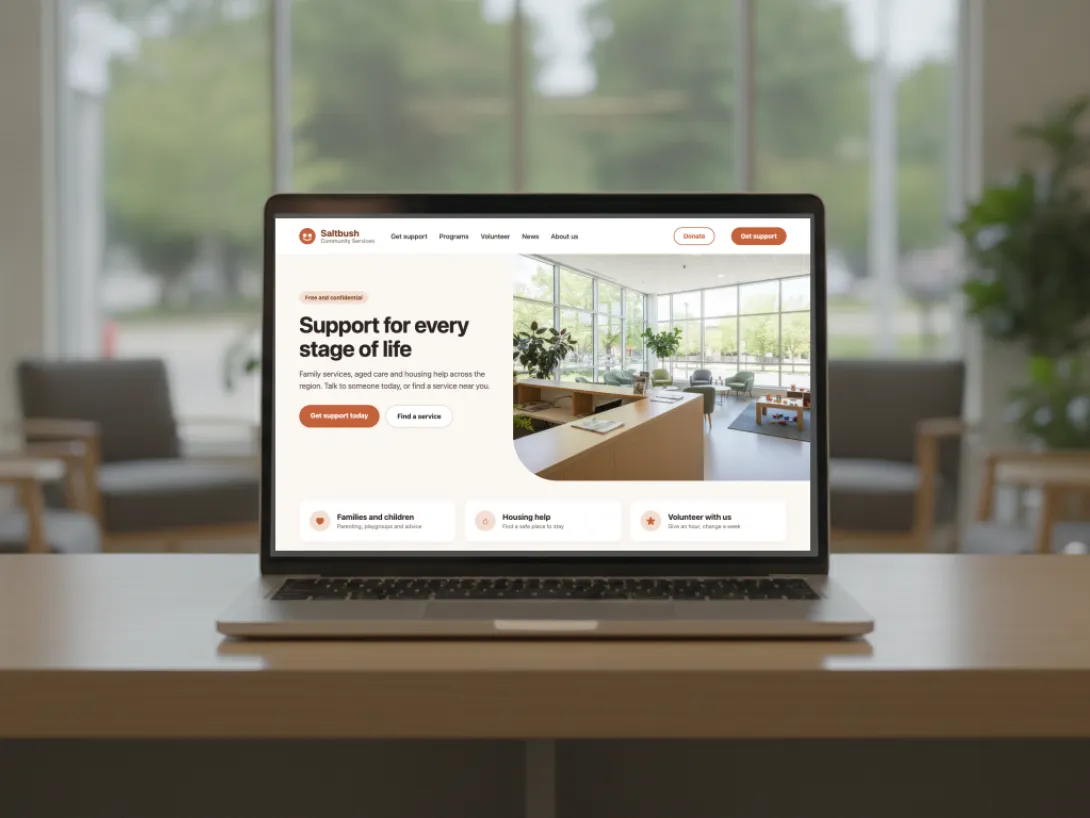
Does your website still fit the way your organisation works?
Most organisations start thinking about a new website when the current one stops keeping up. Maybe your team works around it every week, or a new service needs pages and forms the site was never built for. Sometimes the brand has moved on, or the technology underneath has reached the end of its life.
A new website is a big decision. The people who use it and the editors who keep it current both have to find it easy, and whoever looks after it in 3 years' time has to be able to work in it. It also has to arrive on a date and a budget someone has signed off.
We plan, build and test your new Drupal website as one team, so what launches is what you planned, and every change after that is checked before it goes live.
How we build your website
Every build follows the same 5 steps, and nothing is built until you've approved the scope and the price.
1. We get to know your organisation and your current site
We start by listening: who the website is for, what it has to do, what your team finds hard today and what has to carry across. If you have a site already, our free website health check gives us an outside view of it in a few minutes, and a site audit goes deeper when the new build depends on what's there.
2. We plan the website with you
Together we work out the pages and content types, the components your editors will build pages from, the forms, and the systems the site connects to, such as single sign-on, a CRM or search. If you need it, our brand and design work happens here too, and the same team builds what it designs.
3. We quote it, and you approve it
You get a quotation that shows how the price is built, with the work broken into parts you can read. We cost every suitable project 2 ways, hand-crafted and AI-assisted, so you can see what each would take. A fixed-price quote is the price, and nothing starts until you've approved the scope and the cost.
4. We build and test it
We build in short stages you can follow, on Vortex(Opens in a new tab/window), the open-source Drupal project template we created and maintain. Automated tests and a CI/CD pipeline run from the first commit, so every change is checked before it reaches the live site.
Each week you get an email with the hours used and where the budget stands, and you can review working pages as they're built.
5. We launch it and hand it over
We move your content across, set up hosting and take the site live. Your editors get guidance on building pages and managing content, and your team gets the documentation it needs to run the site. After launch, the same team can keep looking after it.
What you get
At launch, the website and everything needed to keep it going are yours.
A website that does what you planned
A Drupal website with the pages, components, forms and integrations we agreed in the plan, built to Drupal's coding standards.
A component library for your editors
Editors build pages from a set of components, such as banners, cards, forms and calls to action, so new pages match the rest of the site.
Tests and a pipeline that stay with the site
The automated tests and the pipeline that builds, tests and deploys every change are part of the code you receive, so changes made years after launch go through the same checks.
Your code and its documentation
The code lives in a repository you own, with documentation for your team and for whoever looks after the site in years to come.
Where we've done this
We've built and supported Drupal websites since 2016, for universities, government, community organisations and businesses. A few examples:
In 2026 we rebuilt RET Conveyancing's website on Drupal 11, with a component library the team builds pages from and 4 client intake forms that safely accept documents. It runs on the same tooling and automated tests as every website we build.
We've worked alongside Victoria University's own web team on the university's websites since 2017.
For a state emergency services agency, working through a global digital agency, we've led the Drupal engineering behind the public website people turn to during floods and storms since 2024.
We helped build the foundations of the Victorian Government's Single Digital Presence, the system behind vic.gov.au and the agency websites around it.
What it costs
Every website is quoted for its own scope. We talk through what you need, then send a fixed-price quote that shows how the price is built. A fixed-price quote is the price: if the agreed work takes longer than we planned, we carry it. Nothing starts until you've approved the scope and the cost.
On suitable work, the AI-assisted option comes in up to 30% less. It goes through the same automated tests and reviews, with senior engineers making the decisions.
Support after launch runs on a support plan, and managed hosting is priced per site.
Where a new website leads
Once your website is live, a support plan keeps Drupal and its modules up to date, security releases included, and covers the changes your team asks for. Managed hosting puts the infrastructure under it in the same hands. If your current site runs on an older version of Drupal, a Drupal upgrade or a migration may be the better place to start, and a site audit will tell you which.
FAQs
Do you only build with Drupal?
Yes. We build and support Drupal websites, and our tooling, testing and support all centre on it. If Drupal isn't the right fit for what you need, we'll tell you early.
How long does a new website take?
It depends on the scope, and your quotation sets out the timeline alongside the price. A focused site with a clear content model can take a few weeks, and a large site with many integrations takes months.
Can you build from our designer's or agency's designs?
Yes. We often build from designs another team has created, and we work as the named technical partner for agencies. Our own brand and design work is there if you need it.
Will we be able to update the website ourselves?
Yes. Editors build and update pages from the component library, and we hand over guidance for your team at launch.
Who owns the code?
You do. The code lives in a repository you own, along with its tests and documentation, so any Drupal developer can pick it up.
Can you move our existing content across?
Yes. Content migration is part of the build when you need it, including pages, media and documents from your current site.
What happens after launch?
We can keep looking after the site on a support plan, and host it on managed hosting if you'd like the same team to answer for both.